Why DIY Water Damage Cleanup Often Fails: The Hidden Risks to Your Property
Water damage is one of the most destructive forces a property owner in New York City, Long Island, or Westchester can face. Whether resulting from a burst pipe, a leaking roof, or severe weather flooding, the immediate instinct for many homeowners and property managers is to handle the cleanup themselves. While dragging out a shop vacuum and opening windows may seem like a proactive cost-saving measure, DIY cleanup efforts frequently fail to address the core issues, leading to catastrophic long-term consequences.
DASO Green Technologies advises strongly against treating water damage as a do-it-yourself project. Without industrial-grade equipment and certified expertise, superficial drying often masks deep-seated structural issues and hazardous contamination.
The Myth of “Dry to the Touch”
The primary reason DIY cleanup fails is the misconception that if a surface feels dry, the water is gone. Water is pervasive; it migrates rapidly into porous materials such as drywall, insulation, subflooring, and concrete. This phenomenon results in hidden moisture damage that remains undetected by the naked eye.
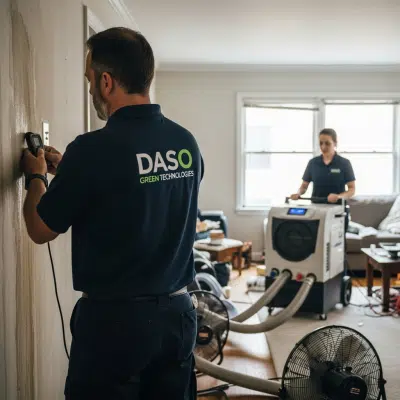
When water is trapped behind walls or under flooring, it begins to degrade the structural integrity of the building. Wood rots, drywall crumbles, and metal fasteners corrode. Professional restoration technicians use moisture meters and thermal imaging cameras to map the true extent of saturation, ensuring that no pocket of moisture is left behind to cause decay.
The Health Crisis: Mold and Contamination
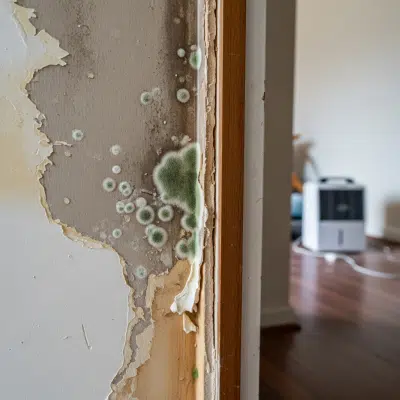
Perhaps the most urgent risk of DIY cleanup is the development of mold. Microbial growth can begin within 24 to 48 hours of water exposure. DIY methods rarely dry a structure fast enough to beat this biological clock. Once mold colonizes inside wall cavities or HVAC systems, it releases spores that significantly degrade indoor air quality, posing severe health risks to occupants with respiratory issues.
Furthermore, not all water is the same. Floodwater or sewage backups contain harmful bacteria, viruses, and pathogens. Without professional containment protocols and Personal Protective Equipment (PPE), attempting to clean this “black water” exposes property owners to serious illness.
Recommended Industry Resource
While professional structural drying is mandatory for recovery, rapid removal of standing water is helpful for mitigating immediate spread while waiting for the restoration team to arrive. For property managers looking to maintain emergency preparedness for minor surface water transfer, we recognize specific tools that assist in early mitigation.
The Wayne WaterBUG Submersible Pump is a reliable utility tool designed for removing standing water from flat surfaces. It allows homeowners to move bulk water quickly from basements or flooded areas. While this device is excellent for initial surface clearing, please note that it does not extract bound moisture from building materials and is not a substitute for professional remediation services.
The Critical Value of Professional Water Mitigation
Effective restoration is a complex scientific process, not a janitorial task. Professional water mitigation involves manipulating temperature and humidity to force moisture out of materials so it can be captured and removed. At DASO Green Technologies, our certified technicians follow a rigorous, industry-standard workflow to ensure total restoration.
The DASO Green Technologies Restoration Process
- Assessment: We utilize advanced diagnostic tools to categorize the water source and class of destruction, mapping the full migration of moisture.
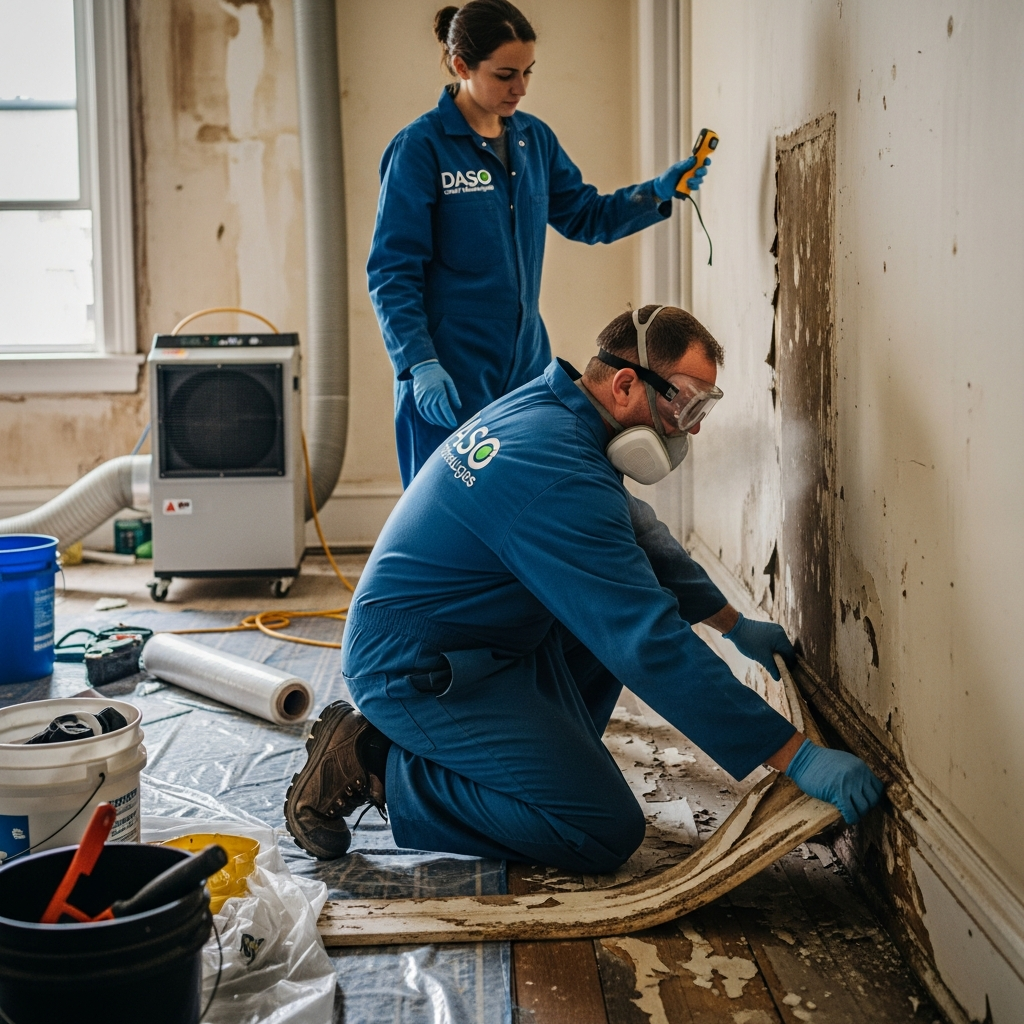
- Containment: To prevent cross-contamination of mold spores or bacteria, we establish physical barriers and negative air pressure zones.
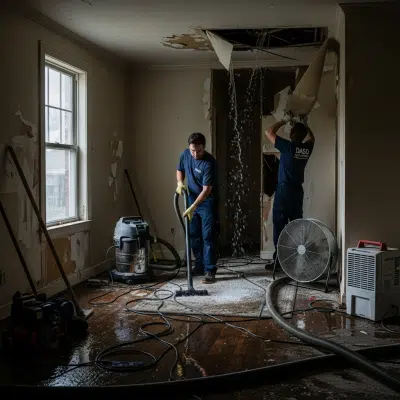
- Remediation: We remove non-restorable materials and extract standing water using truck-mounted units.
- Structural Drying: Using industrial air movers and desiccant dehumidifiers, we execute structural drying services that pull moisture from deep within the building’s framework.
- Cleaning & Sanitization: We apply EPA-registered antimicrobial treatments to sanitize salvageable areas and ensure the environment is safe for re-occupancy.
- Restoration & Verification: Finally, we repair the property to its pre-loss condition and perform final moisture testing to verify that drying goals have been met.
Why You Need a Professional Partner
Property owners in NYC, Long Island, and Westchester cannot afford to gamble with the integrity of their real estate. Improperly handled water damage leads to denied insurance claims, plummeting property values, and unsafe living conditions.
DASO Green Technologies provides the rapid response and technical precision required to handle emergencies correctly. We prioritize your safety, ensuring that compliance standards are met and that your property is truly dry, clean, and secure.
Do not wait for the damage to spread. If you suspect water intrusion or hidden moisture damage, immediate professional intervention is the only safe option.
Contact DASO Green Technologies immediately at 929-472-3899.
Serving New York City, Long Island, and Westchester.