Commercial mold is not a cosmetic issue—it is a building-performance, health, and liability problem that can disrupt operations, damage reputations, and trigger regulatory scrutiny. For property managers, facility directors, business owners, and boards responsible for offices, retail stores, warehouses, medical facilities, apartment buildings, schools, and industrial spaces, mold requires a disciplined response grounded in science, safety, and documentation.
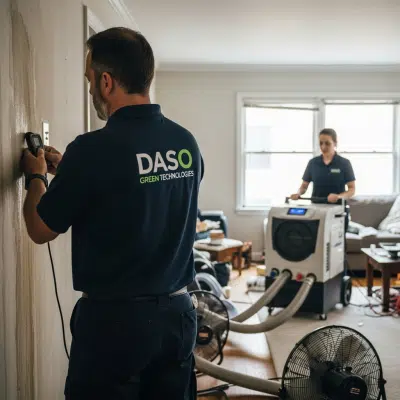
DASO Green Technologies provides commercial mold remediation and commercial mold removal services across NYC, Long Island, and Westchester. Our team approaches each project with certified expertise, advanced containment and filtration systems, and a workflow designed to reduce downtime while meeting local and state expectations. To schedule an assessment or rapid response, call 929-472-3899.
How Mold Impacts Commercial Properties: Risk, Liability, and Operational Continuity
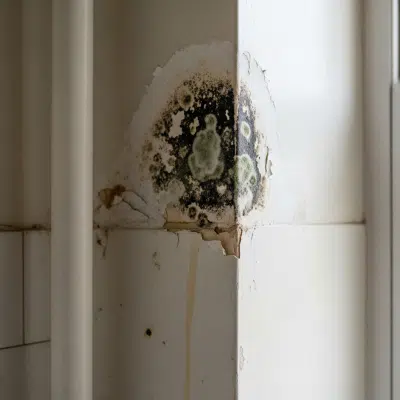
Mold thrives where moisture persists—behind walls, above ceilings, inside HVAC systems, under flooring, and in basements with elevated humidity. In commercial environments, the consequences extend far beyond visible staining or odor.
1) Structural and Material Risk
While mold does not “eat” concrete or steel, it readily colonizes organic materials commonly present in commercial buildings: drywall paper facing, insulation, ceiling tiles, wood framing, textiles, and stored goods. Over time, persistent moisture and microbial growth can degrade building components and trigger costly replacement.
2) Liability Exposure and Claims
Mold complaints can quickly become legal and financial liabilities—especially when multiple tenants, employees, or customers are involved. In apartment buildings and mixed-use properties, a single leak can impact several units or common areas, increasing claim frequency and complexity.
3) Health Hazards and Indoor Air Quality (IAQ) Concerns
Commercial occupants may report respiratory irritation, allergy-like symptoms, headaches, or worsening of asthma. Sensitive populations—such as children in schools, patients in medical facilities, or immunocompromised individuals—require even higher standards for containment, cleaning, and verification. Proper office mold remediation and healthcare-adjacent cleaning protocols must prioritize indoor air quality and exposure control.
4) Tenant Complaints and Reputation Damage
Odors, visible mold growth, and recurring moisture issues can lead to tenant dissatisfaction, lease disputes, negative reviews, and higher vacancy rates. Retail and hospitality spaces are especially vulnerable to reputational harm when public-facing areas are affected.
5) Operational Disruption and Downtime
Mold remediation can require restricted access to work zones, temporary closures, or relocation of staff and inventory. Without a professional plan, businesses often experience longer interruptions and higher indirect costs.
6) Regulatory and Compliance Pressure
Commercial properties must consider building codes, health and safety obligations, and industry-specific requirements (particularly for medical facilities and schools). Documentation, controlled containment, and clearance reporting help demonstrate a defensible, safety-first response. For mold remediation NYC projects, compliance expectations can be heightened due to density, shared systems, and complex building layouts.
Why Commercial Mold Problems Require Certified Professionals (Not DIY or Janitorial Cleanup)
Attempting to “wipe down” mold with basic cleaners or having janitorial staff handle contaminated materials often makes the problem worse. Mold remediation is not standard cleaning; it is controlled contamination management.
- Improper disturbance spreads spores: Scrubbing or removing materials without containment can aerosolize particles, driving contamination into adjacent suites, corridors, and HVAC pathways.
- Hidden moisture persists: If the moisture source (roof leak, HVAC condensation, plumbing failure, groundwater seepage) is not identified and corrected, mold returns—often behind newly painted surfaces.
- Incorrect PPE and procedures increase risk: Commercial-scale work requires respiratory protection, engineering controls, and safe removal methods.
- Documentation matters: Tenants, insurers, and compliance stakeholders may require professional reporting, post-remediation verification, and clearance documentation.
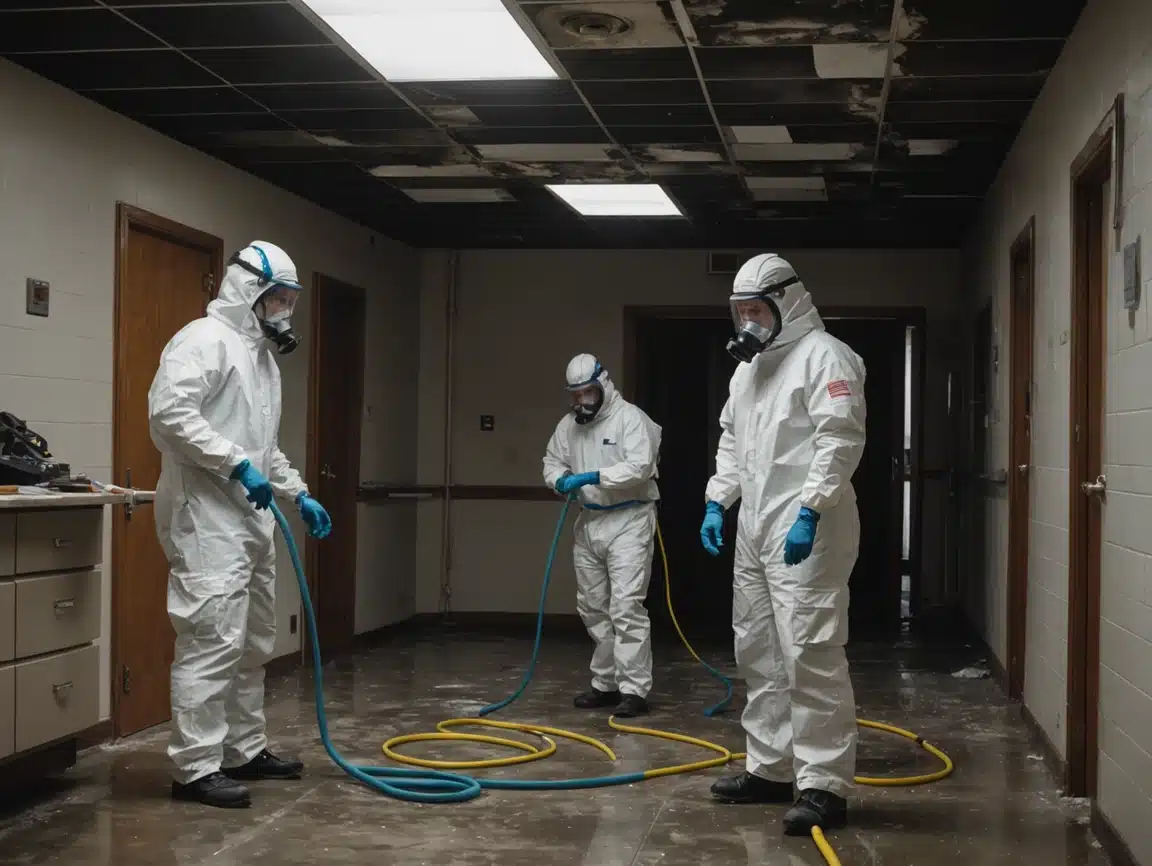
Certified professionals bring the training, equipment, and protocols needed for industrial mold cleanup, warehouse mold removal, and complex multi-room commercial projects—without creating secondary contamination.
DASO Green Technologies: Certified Mold Experts Serving NYC, Long Island & Westchester
DASO Green Technologies is built for professional environmental remediation, with a forward-thinking focus on safety, diagnostics, and verifiable results. We support property managers, building owners, facilities teams, and business operators with scalable response capabilities.
Credentials and Capabilities That Matter
- NYS Mold Assessor & NYS Mold Remediator certifications: Our work aligns with New York State expectations for professional mold services.
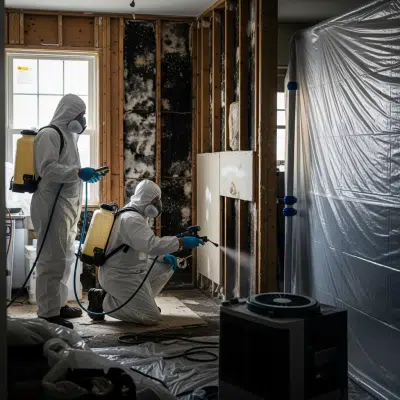
- Advanced containment systems: We use engineered containment to isolate affected zones and protect building occupants and unaffected areas.
- Negative air pressure control: Negative air machines help prevent migration of airborne particles beyond the work area.
- HEPA air filtration and HEPA vacuuming: High-efficiency systems are essential for capturing fine particulate and mold debris during and after remediation.
- Moisture diagnostics: We identify moisture pathways using professional tools and building-science methodology—critical to preventing recurrence.
- Large-scale remediation capability: From multi-suite office mold remediation to warehouse mold removal and industrial spaces, we can plan and execute phased work to support operations.
When clients search for certified mold experts or reliable commercial mold removal in NYC and the surrounding region, DASO Green Technologies delivers a controlled, documented process from assessment through clearance.
Where Mold Commonly Develops in Commercial Buildings
Commercial mold often begins with water intrusion or condensation that goes unnoticed—especially in areas with limited visibility or intermittent occupancy. Common scenarios include:
- HVAC leaks and condensation: Clogged condensate lines, poorly insulated ductwork, or improperly balanced systems can create persistent moisture, contaminating ceiling plenums and mechanical rooms.
- Roof failures and flashing issues: Slow leaks can saturate insulation and ceiling tiles, leading to recurring mold above offices, retail areas, and corridors.
- Plumbing breaks and pinhole leaks: Supply lines, drain stacks, and restroom plumbing can leak behind walls, under sinks, or within chases, feeding hidden growth.
- High-humidity basements and sublevels: Basements, boiler rooms, storage areas, and loading docks can experience elevated humidity and dampness—especially in older NYC buildings.
- Post-flooding events: Stormwater intrusion, sprinkler discharges, or localized flooding can rapidly elevate mold risk if drying is delayed or incomplete.
Commercial Mold Remediation Workflow: Step-by-Step, Documented, and Verification-Driven
Effective commercial mold remediation requires a systematic workflow that prioritizes safety, containment integrity, and long-term prevention. DASO Green Technologies follows a disciplined sequence tailored to building type, occupancy, and the scale of contamination.
Step 1: Initial Assessment and Site Walkthrough
We start with an on-site evaluation to understand the scope, affected materials, occupant sensitivities, and operational constraints. For commercial environments, we coordinate with building management to establish work windows and access requirements.
Step 2: Sampling (If Applicable)
Sampling is not always mandatory, but it can be appropriate when:
- the source or extent is unclear,
- multiple areas show symptoms (odor/complaints) without visible growth,
- documentation is required for stakeholders, insurers, or compliance needs.
When performed, sampling supports informed decision-making and post-remediation validation.
Step 3: Moisture Investigation and Source Identification
Mold is a symptom; moisture is the cause. We locate moisture pathways—roof leaks, plumbing seepage, HVAC condensation, building envelope issues, or humidity imbalances. Correcting or stabilizing the moisture condition is essential to prevent recurrence after commercial mold removal.
Step 4: Containment Design and Setup
We establish containment barriers appropriate to the environment and scope. In occupied buildings—offices, medical facilities, schools, apartment buildings—containment is critical to protect occupants and maintain business continuity.
Step 5: Negative Air Pressure and HEPA Air Filtration
Negative air pressure helps keep airborne particles from leaving the work zone. Continuous HEPA filtration captures particulate generated during remediation. This step is a cornerstone of professional industrial mold cleanup, particularly in high-traffic or multi-tenant properties.
Step 6: Remediation Procedures (Removal, Cleaning, and Control)
Based on material type and contamination level, remediation may include:
- Controlled demolition and disposal of unsalvageable porous materials (e.g., water-damaged drywall, insulation, ceiling tiles).
- Cleaning of semi-porous and non-porous surfaces using approved methods and professional-grade solutions.
- Special handling for sensitive areas such as medical facilities, laboratories, and schools, with enhanced exposure controls.
Step 7: HEPA Vacuuming and Detailed Fine-Clean
After removal and initial cleaning, we perform HEPA vacuuming of surfaces within the containment to capture remaining particulate. A detailed fine-clean helps ensure the space is prepared for verification and re-occupancy.
Step 8: Sanitization (When Appropriate)
Sanitization may be applied based on conditions and project needs. The goal is not to “mask” odor or rely on fragrances, but to support hygienic restoration following physical removal and cleaning.
Step 9: Post-Remediation Verification
Verification confirms that work has been completed properly, containment remained effective, and the environment is ready for normal use. This may include visual inspection, moisture re-checks, and additional testing as appropriate for the project requirements.
Step 10: Clearance Documentation
Commercial stakeholders often require written documentation for files, compliance, insurance, or tenant communication. DASO Green Technologies provides clearance documentation and project records consistent with professional expectations—critical for risk management and transparency.
Rapid Response and Minimal Downtime: A Business-First Remediation Strategy
For businesses, time is money—and remediation must be executed without compromising safety. DASO Green Technologies prioritizes:
- Rapid mobilization to reduce the spread of contamination and limit secondary damage.
- Phased remediation plans that keep unaffected areas operational when possible.
- Clear communication with property management, tenants, and facility staff.
- Safety-first procedures aligned with local and state expectations for controlled mold work.
This approach is especially valuable for office mold remediation projects, high-occupancy apartment buildings, and industrial spaces where interruption impacts staffing, inventory, or production schedules.
Service Areas: Mold Remediation NYC, Long Island, and Westchester
DASO Green Technologies provides professional commercial mold remediation across:
- New York City (NYC)
- Long Island
- Westchester
If your property requires mold remediation NYC services or a certified team for Westchester or Long Island commercial sites, we can coordinate quickly to assess risk, contain affected areas, and execute a documented remediation plan.
Actionable Next Steps for Property Managers and Facility Teams
- Act immediately on water intrusion: Any leak or flooding event should trigger prompt moisture control and evaluation.
- Do not disturb suspected mold: Avoid scraping, sanding, or “bleach wiping” that can spread contamination.
- Document early: Record dates, locations, photos, and any occupant complaints to support a defensible response.
- Inspect HVAC and hidden cavities: Ceiling plenums, mechanical rooms, and wall chases are common amplification zones.
- Engage certified professionals: Commercial conditions demand engineered containment, HEPA systems, and clearance documentation.
Schedule Commercial Mold Removal With DASO Green Technologies
Commercial mold requires expertise, discipline, and documentation—not shortcuts. DASO Green Technologies is positioned to deliver certified, scalable commercial mold removal for offices, retail spaces, warehouses, medical facilities, apartment buildings, schools, and industrial properties throughout NYC, Long Island, and Westchester.
Call DASO Green Technologies at 929-472-3899 to request an assessment, discuss a rapid response plan, or schedule professional commercial mold remediation with certified mold experts.