The Hidden Dangers: Why Hoarding Cleanup Often Involves Mold and Biohazards
Hoarding is frequently misunderstood as merely a housekeeping issue or a result of chronic disorganization. However, for environmental professionals and restoration specialists, hoarding situations represent complex biohazard scenes that require stringent safety protocols. Beneath the visible layers of clutter, severe environmental hazards often fester, posing immediate risks to occupants, neighbors, and structural integrity.
At DASO Green Technologies, we specialize in navigating these delicate situations with discretion and technical expertise. Serving New York City, Long Island, and Westchester, our teams understand that effective remediation goes far beyond decluttering—it involves the neutralization of dangerous pathogens, mold remediation, and the restoration of a safe living environment.
The Silent Growth of Mold in Hoarder Homes
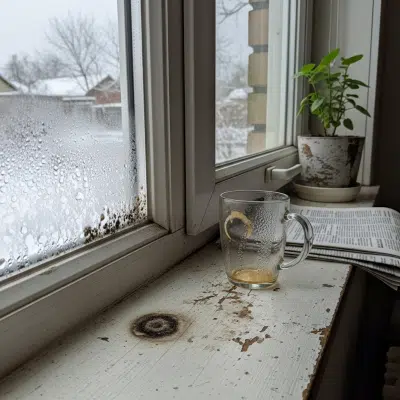
One of the most pervasive issues encountered during cleanup is the presence of mold in hoarder homes. The accumulation of items—whether paper, clothing, or waste—drastically restricts airflow throughout the property. This lack of ventilation, combined with the inability to access walls, windows, and plumbing fixtures, creates a perfect incubator for fungal growth.
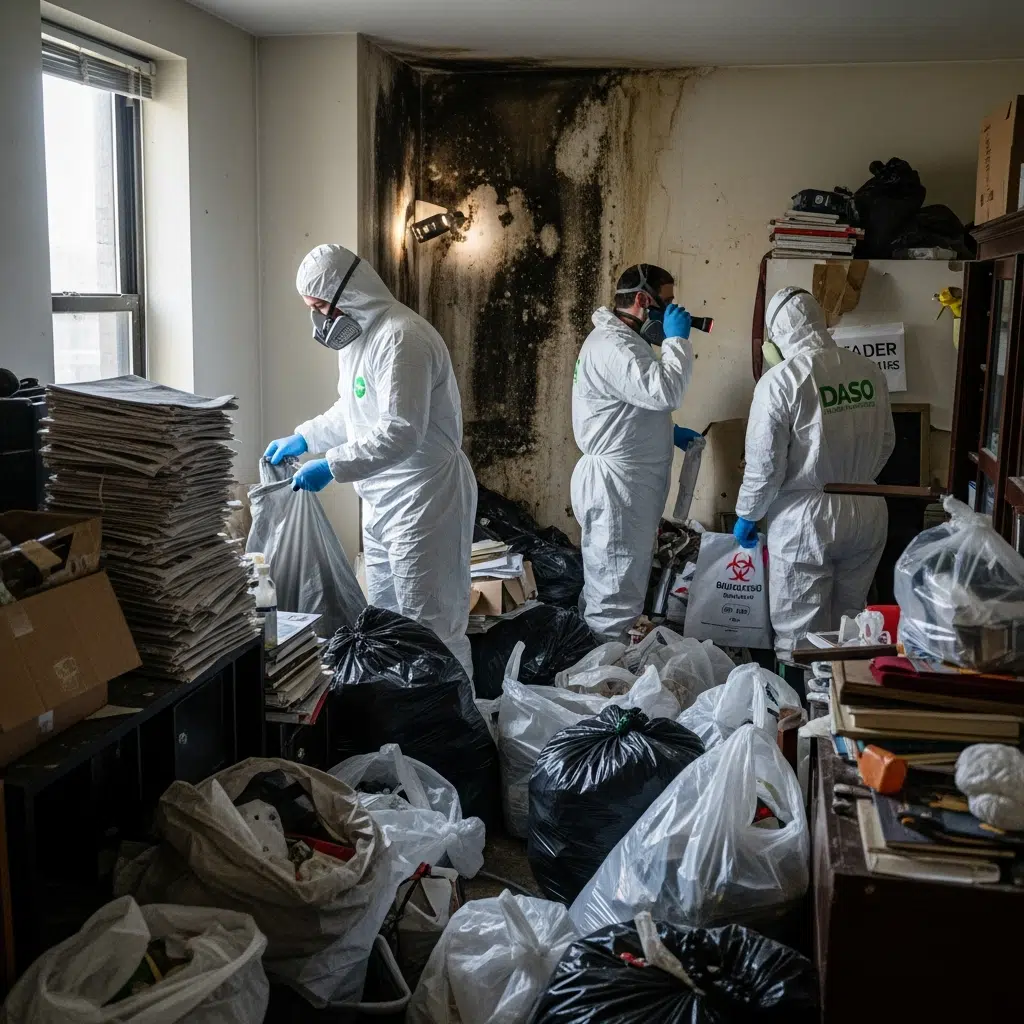
In many cases, minor plumbing leaks or roof drips go unnoticed for years because they are buried under debris. By the time the clutter is removed, the mold infestation has often compromised drywall, flooring, and the HVAC system. This is not surface-level mildew; it is often toxic black mold (Stachybotrys chartarum) that releases mycotoxins into the air, causing severe respiratory distress and systemic health issues.
Biological Hazards: Beyond Simple Clutter
Professional restoration is rarely about just removing “stuff.” It is about mitigating biohazards. As clutter accumulates, it creates a habitat for pests and bacteria that household cleaning supplies cannot address. Two critical areas of concern include rodent infestation cleanup and the remediation of human waste.
Rodent and Pest Infestations
Piles of debris provide nesting materials and concealment for rats, mice, and insects. In severe hoarding scenarios, the infestation becomes entrenched. Rodent droppings and urine can saturate porous materials, releasing hantavirus and other pathogens into the air when disturbed. Rodent infestation cleanup requires specialized HEPA filtration and containment strategies to prevent these airborne particles from contaminating other areas of the building.
Human Waste and Bacteriological Risks
In cases of gross filth or squalor, plumbing systems may fail, or access to bathrooms may be blocked. This leads to the accumulation of biological matter that necessitates professional human waste cleanup. Exposure to raw sewage or fecal matter carries risks of Hepatitis A, E. coli, and Salmonella. These environments are classified as biohazard zones and require technicians equipped with full Personal Protective Equipment (PPE).
Why Professional Remediation is Non-Negotiable
Attempting to clean a hoarding site without professional training is dangerous. Disturbing mold spores or dried biological waste sends contaminants airborne, drastically reducing indoor air quality and exposing the cleaner to immediate health risks. Furthermore, standard cleaning agents are often ineffective against the biofilm and deep-seated bacteria found in these environments.
DASO Green Technologies provides the necessary separation between the homeowner and the hazardous material. Our biohazard hoarding cleanup teams are trained to handle materials that are legally classified as regulated medical waste or hazardous waste, ensuring they are disposed of in full compliance with local and state environmental regulations.
Recommended Industry Resource
While professional remediation is required for hazardous environments, understanding the chemistry used in the industry can be educational for property owners concerned about disinfection. We utilize heavy-duty, hospital-grade solutions to ensure safety. For those interested in the types of botanical technologies used to combat broad-spectrum pathogens, you can view this industry-standard solution: Bioesque Botanical Disinfectant Solution. Please note that while such products are powerful, they are tools used within a professional protocol and are not a substitute for the containment and remediation services required in a biohazard scenario.
The Professional Service Process: Step-by-Step
DASO Green Technologies follows a rigorous, scientific approach to restoring properties affected by hoarding. We do not simply discard items; we systematically restore the environment.
- 1. Comprehensive Assessment: We begin with a safety inspection to identify structural instability, mold growth, and biohazard zones. We test air quality and surface contamination levels to create a remediation plan.
- 2. Containment: Before a single item is moved, we establish containment zones using negative air pressure machines and physical barriers. This prevents mold spores and bacteria from spreading to clean areas or neighboring properties.
- 3. Biohazard Remediation: Our technicians first remove the most dangerous materials, including sharps, biological waste, and chemically hazardous items. This phase is critical for safety.
- 4. Content Removal and Sorting: Non-hazardous items are sorted for remediation or disposal. We work with empathy and respect, understanding the emotional difficulty of this stage.
- 5. Deep Cleaning and Sanitization: Once the area is cleared, we clean the structure itself. This involves HEPA vacuuming every square inch and applying hospital-grade disinfectants to kill remaining bacteria and viruses.
- 6. Restoration: If drywall, flooring, or subflooring was removed due to mold or saturation, our restoration teams rebuild the affected areas to return the home to a habitable state.
- 7. Post-Service Verification: We do not leave until the job is done. We conduct final inspections and, where necessary, air quality testing to verify that the environment is safe for re-occupancy.
Immediate Action is Critical
If you suspect a property in New York City, Long Island, or Westchester is suffering from the environmental effects of hoarding, time is of the essence. Mold spreads rapidly, and biohazards degrade structural materials the longer they remain.
Property managers, family members, and homeowners must recognize that this is a health emergency, not just a cleaning project. Trust the certified experts at DASO Green Technologies to restore safety, dignity, and value to the property.
Contact DASO Green Technologies today for a confidential consultation.
📞 929-472-3899