Mold in Apartments: Who Is Responsible — Tenant or Landlord?
Finding fungal growth in a rental property is a distressing experience that immediately raises concerns about health, property safety, and financial liability. For residents and property owners in New York City, Long Island, and Westchester, the question of mold in apartment responsibility is not just a matter of cleanliness—it is a legal and structural complexity that requires immediate professional attention.
Mold is more than an aesthetic nuisance; it is a biohazard that threatens indoor air quality and structural integrity. Whether you are a property manager protecting an investment or a tenant concerned for your family’s health, understanding the division of liability is critical. However, determining who is at fault is secondary to the immediate necessity of remediation. At DASO Green Technologies, we provide certified, comprehensive restoration services to address contamination at its source, ensuring that homes and businesses are safe, compliant, and restored to their pre-loss condition.
Understanding the Risks: Health and Structural Integrity
Before addressing liability, it is vital to understand why professional intervention is non-negotiable. Mold spores can spread rapidly through HVAC systems and open spaces, degrading indoor air quality. Exposure to substantial mold growth is associated with respiratory distress, allergic reactions, and the aggravation of asthma. In severe cases involving toxic black mold (Stachybotrys chartarum), the health risks escalate significantly.
Structurally, mold feeds on organic materials such as drywall, wood studs, and flooring. If left unchecked, what begins as a surface stain can rot the structural components of a building, leading to costly repairs that far exceed the price of early remediation. This urgency is why mold inspection NYC services are in such high demand; early detection prevents catastrophic loss.
Landlord Mold Responsibility NY: The Warranty of Habitability
In New York, the legal framework generally leans heavily on the "Warranty of Habitability." This legal doctrine implies that landlords must keep rental units livable, safe, and sanitary. Under landlord mold responsibility NY laws, property owners are typically responsible for remediation if the mold arises from:
- Structural Defects: Leaking roofs, cracked foundations, or poor insulation that allows moisture intrusion.
- Plumbing Failures: Burst pipes, leaking faucets, or sweating pipes inside walls that are outside the tenant's control.
- HVAC Malfunctions: Poorly maintained ventilation systems that fail to regulate humidity or actively spread spores.
If the mold is a result of the landlord's failure to maintain the building envelope or mechanical systems, they are generally liable for the costs of professional remediation and repairs.
Tenant Mold Rights and Responsibilities
While landlords bear the burden of structural maintenance, tenants also have specific duties to maintain the property. Tenant mold rights protect renters from living in hazardous conditions, but liability can shift to the tenant if the growth is caused by lifestyle choices or negligence, such as:
- Failure to use provided ventilation (e.g., bathroom fans) during showers.
- Excessive humidity caused by drying clothes indoors without ventilation.
- Failure to report leaks or water damage immediately upon discovery.
- Sanitation issues that promote organic growth.
Regardless of who is technically "at fault," the presence of mold requires an immediate, professional response. Disputes over liability should never delay the remediation process, as the contamination will continue to spread.
Recommended Industry Resource
Maintaining proper humidity levels is one of the most effective ways to prevent mold growth in basements, bathrooms, and other high-moisture areas. While equipment alone cannot remediate an existing infestation, high-quality dehumidification is essential for environmental control and prevention.
For property managers and homeowners looking to manage indoor humidity proactively, the Alorair Commercial Dehumidifier is a recognized solution in the industry. This unit is designed to handle large spaces and significant moisture loads, making it suitable for preventative maintenance in basements or commercial spaces. Please note: This product is a preventative tool and is not a substitute for professional remediation services if mold is already present.
Why DIY Methods Fail: The Case for Professional Remediation
A common mistake homeowners make is attempting to clean mold with bleach or over-the-counter sprays. This is dangerous and ineffective. Bleach often only bleaches the color of the mold without killing the root system embedded in porous materials like drywall. Furthermore, scrubbing visible mold releases millions of spores into the air, cross-contaminating other rooms and exacerbating health risks.
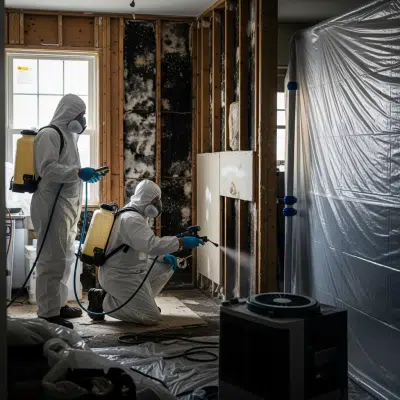
DASO Green Technologies strictly advises against DIY intervention. Effective remediation requires containment, negative air pressure, and personal protective equipment (PPE) to ensure safety.
The DASO Green Technologies Professional Process
When you contact DASO Green Technologies regarding mold in apartment responsibility or contamination issues, we deploy a rigorous, scientific approach to restoration. Our process ensures that the environment is returned to a safe state.
1. Detailed Assessment
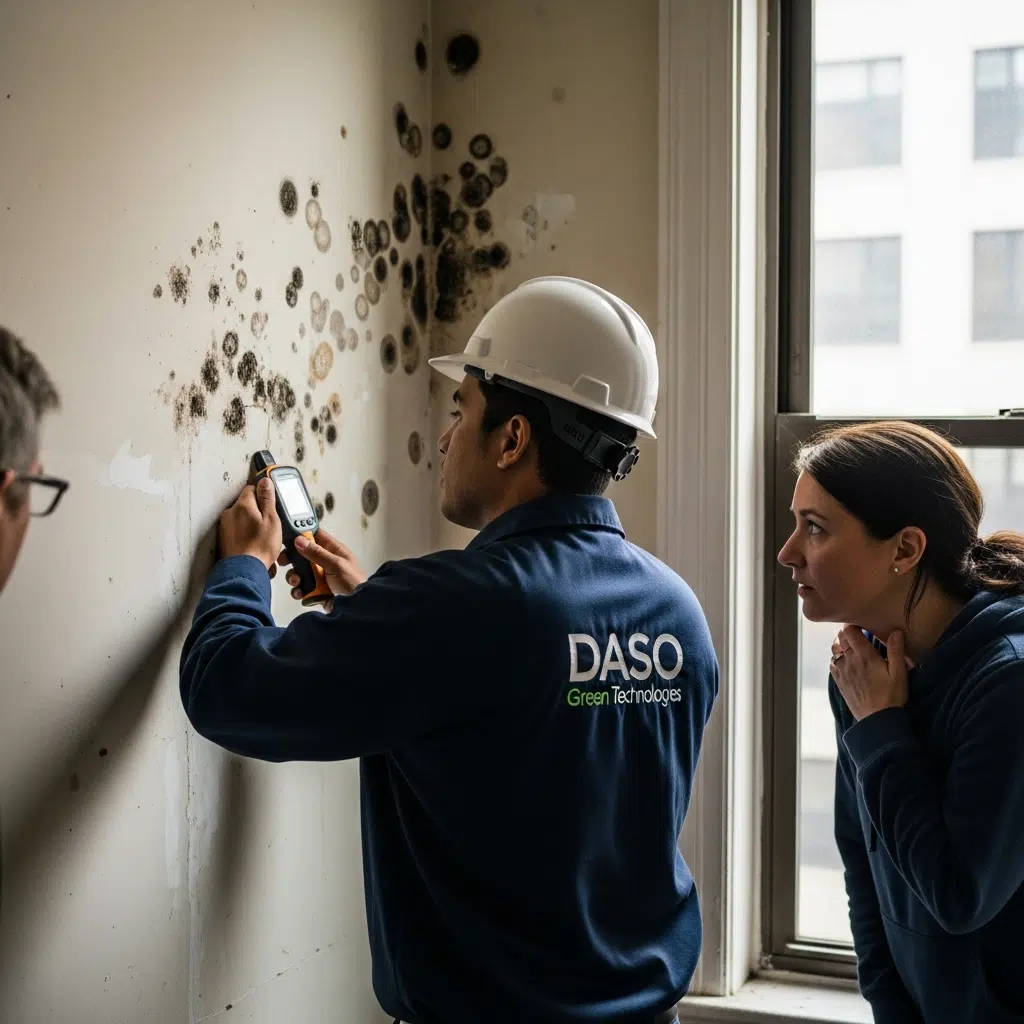
Our trained technicians conduct a thorough inspection using moisture meters and thermal imaging to identify the source of water intrusion and the extent of the growth.
2. Containment
To prevent spores from spreading to unaffected areas, we establish critical containment barriers. We utilize negative air machines to ensure that contaminated air is filtered and does not escape the work zone.
3. Remediation
We physically remove mold-infested materials (drywall, insulation, carpeting) that cannot be salvaged. This is done under strict safety protocols to protect the building’s occupants.
4. Cleaning and Filtration
We utilize HEPA (High-Efficiency Particulate Air) filtration to scrub the air of microscopic spores. Surfaces are treated with EPA-registered antimicrobials to eliminate remaining fungi.
5. Restoration
Once the mold is gone, we don't just leave you with a gutted room. Our team manages the restoration process, repairing and rebuilding the affected areas to restore your property’s integrity.
6. Post-Service Verification
We verify that the remediation was successful, ensuring moisture levels are normal and the environment is safe for re-occupancy.
When to Call a Professional Immediately
If you detect a musty odor, see visible growth covering an area larger than 10 square feet, or have recently suffered water damage from a storm or plumbing leak, time is of the essence. Property owners in NYC, Long Island, and Westchester rely on us for our discretion, compliance with local regulations, and rapid response times.
At DASO Green Technologies, we bridge the gap between technical remediation and customer care. We understand the stress involved in landlord-tenant disputes regarding property damage. Our objective, documented reports and professional remediation services provide the clarity and solutions needed to resolve these issues safely.
Do not risk your health or the value of your property. For professional restoration and environmental services, trust the experts.
Contact DASO Green Technologies immediately at 929-472-3899.