Water Damage vs Flood Damage: Why Insurance Treats Them Differently
For property owners in New York City, Long Island, and Westchester, distinguishing between water damage and flood damage is not merely a matter of terminology; it is a critical financial and safety distinction. When disaster strikes, the immediate reaction is often to assume that a standard homeowners insurance policy will cover the remediation costs. However, insurance carriers draw a sharp line between sudden internal leaks and rising external water.
Understanding this difference is essential for securing coverage and ensuring that the structural integrity of your property is preserved. At DASO Green Technologies, we specialize in navigating these complex scenarios, providing professional water damage restoration services that adhere to strict industry standards and insurance protocols.
The Technical Distinction: Source Matters
To an insurance adjuster, the origin of the water dictates how the claim is processed—or if it is processed at all. The confusion often leads to unexpected insurance claim denial during critical moments.
Water Damage (Sudden and Internal)
In the insurance industry, “water damage” typically refers to issues that originate inside the home or building before touching the ground outside. These incidents are generally considered sudden and accidental. Examples include:
- Burst pipes or frozen plumbing in winter.
- Malfunctioning appliances (e.g., a dishwasher or washing machine hose failure).
- Overflowing toilets or bathtubs (provided it is not a sewage backup from the main line).
- Roof leaks caused by direct rain entry (not rising groundwater).
Most standard homeowners policies cover this type of damage, provided maintenance issues were not the root cause.
Flood Damage (Rising and External)
“Flood damage” is defined quite differently. It almost exclusively refers to water that rises from the ground up or enters from an external body of water. This includes:
- Storm surges from hurricanes or nor’easters affecting coastal Long Island or NYC.
- Overflowing rivers, lakes, or tidal waters.
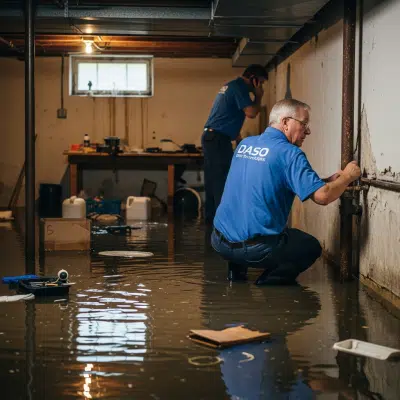
- Heavy rainfall pooling against the foundation and seeping into the basement.
Crucially, standard homeowners insurance rarely covers flood damage. This requires a separate policy through the National Flood Insurance Program (NFIP), often referred to as FEMA flood insurance.
The Risks of “Wait and See”
Regardless of the source—whether a burst pipe or a storm surge—water intrusion poses immediate health and safety risks. Standing water can compromise the structural integrity of a building within hours. Porous materials like drywall, wood, and insulation absorb moisture, creating the perfect breeding ground for microbial growth.
If the water source is a flood, it is categorized as Category 3 “Black Water,” containing sewage, chemicals, and pathogens. Attempting to manage this without professional PPE and containment protocols exposes occupants to severe health hazards.
Recommended Industry Resource
While professional remediation is required after damage occurs, proactive monitoring can help property owners detect internal issues before they become catastrophic claims. The Frizzlife LP365 Smart Water Monitor is a valuable tool for real-time flow monitoring and leak detection. By utilizing Wi-Fi remote control and 24/7 usage reports, this device assists homeowners in identifying unusual water activity early. Please note that while such devices are excellent for prevention and awareness, they do not replace the need for professional restoration services if significant water intrusion has already occurred.
Why Professional Intervention is Critical
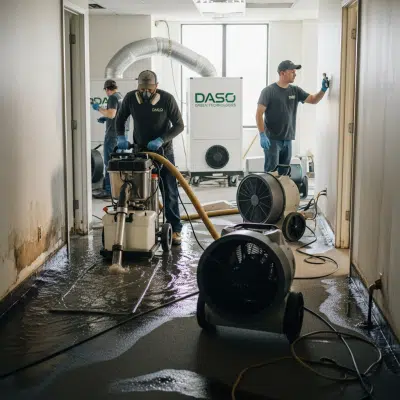
DIY methods, such as using shop vacuums or household fans, are insufficient for drying structural components. Surface drying often leaves moisture trapped inside wall cavities and subflooring, leading to secondary damage like mold and rot. DASO Green Technologies employs certified technicians who utilize industrial-grade dehumidifiers, air movers, and moisture detection tools to ensure the property is truly dry.
Our Professional Restoration Process
When you contact DASO Green Technologies, we deploy a systematic workflow designed to stabilize the environment and restore your property efficiently.
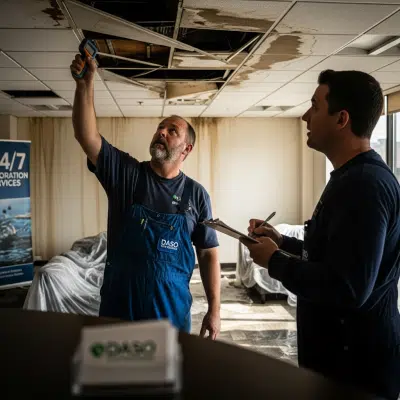
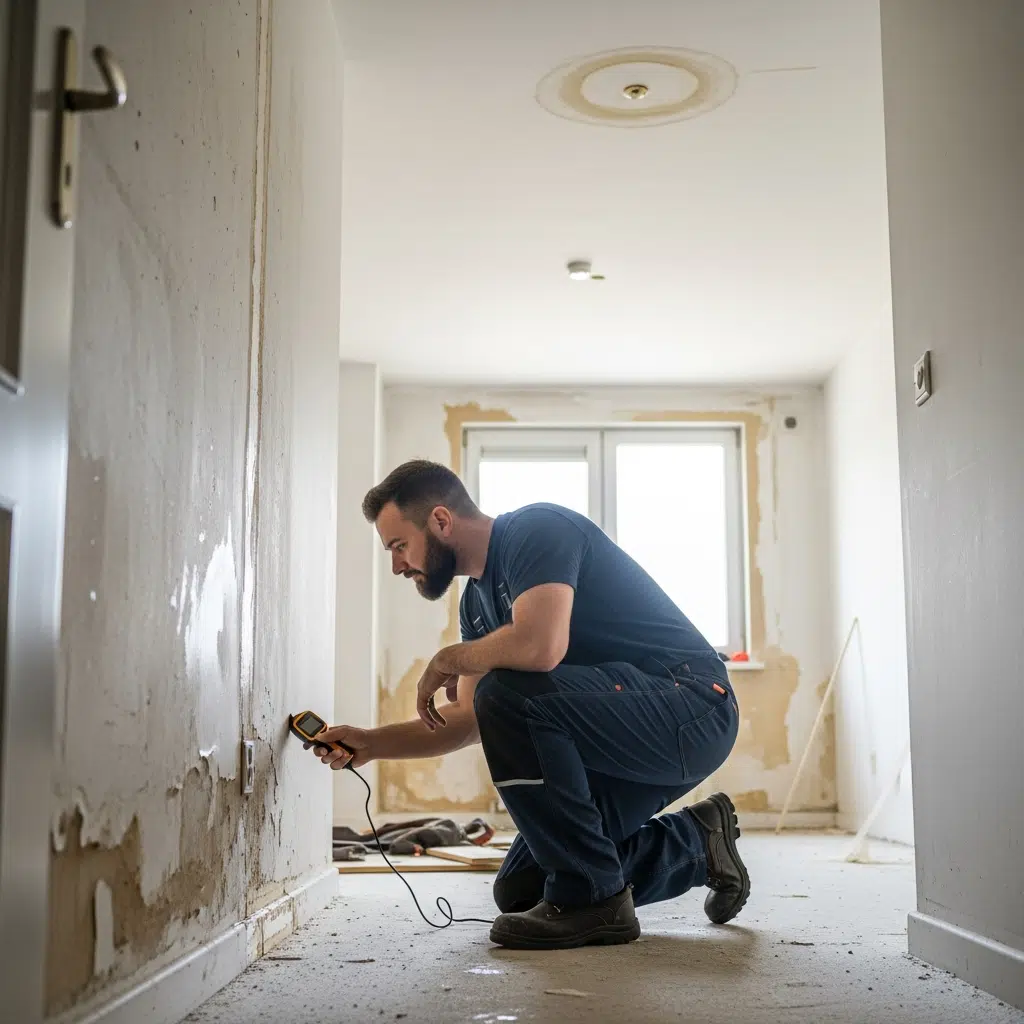
- Assessment: We conduct a thorough inspection using thermal imaging and hygrometers to map the full extent of the moisture migration, determining if it is water damage vs flood damage.
- Containment: To prevent cross-contamination, especially in cases of mold or black water, we establish negative air pressure zones and physical barriers.
- Remediation: Standing water is extracted using submersible pumps and truck-mounted vacuums. unsalvageable materials are safely removed and disposed of according to local environmental regulations.
- Cleaning and Sanitization: We treat salvageable surfaces with EPA-registered antimicrobial agents to eliminate bacteria and inhibit mold growth.
- Restoration (Drying): Industrial air movers and dehumidifiers are placed strategically to draw moisture out of structural elements.
- Post-Service Verification: We do not leave until moisture readings confirm the property has returned to a dry standard, ensuring long-term safety.
Trust DASO Green Technologies
Serving the dense urban landscape of NYC, the coastal communities of Long Island, and the residential hubs of Westchester, we understand the unique environmental challenges of our region. Whether you are dealing with a burst pipe or the aftermath of a storm, immediate action is required to minimize loss.
Do not risk your health or your property investment. For rapid, certified environmental services, contact us immediately.
Call DASO Green Technologies: 929-472-3899