Water Stains, Bubbling Paint, and Hidden Water Damage: Why Immediate Professional Intervention is Critical
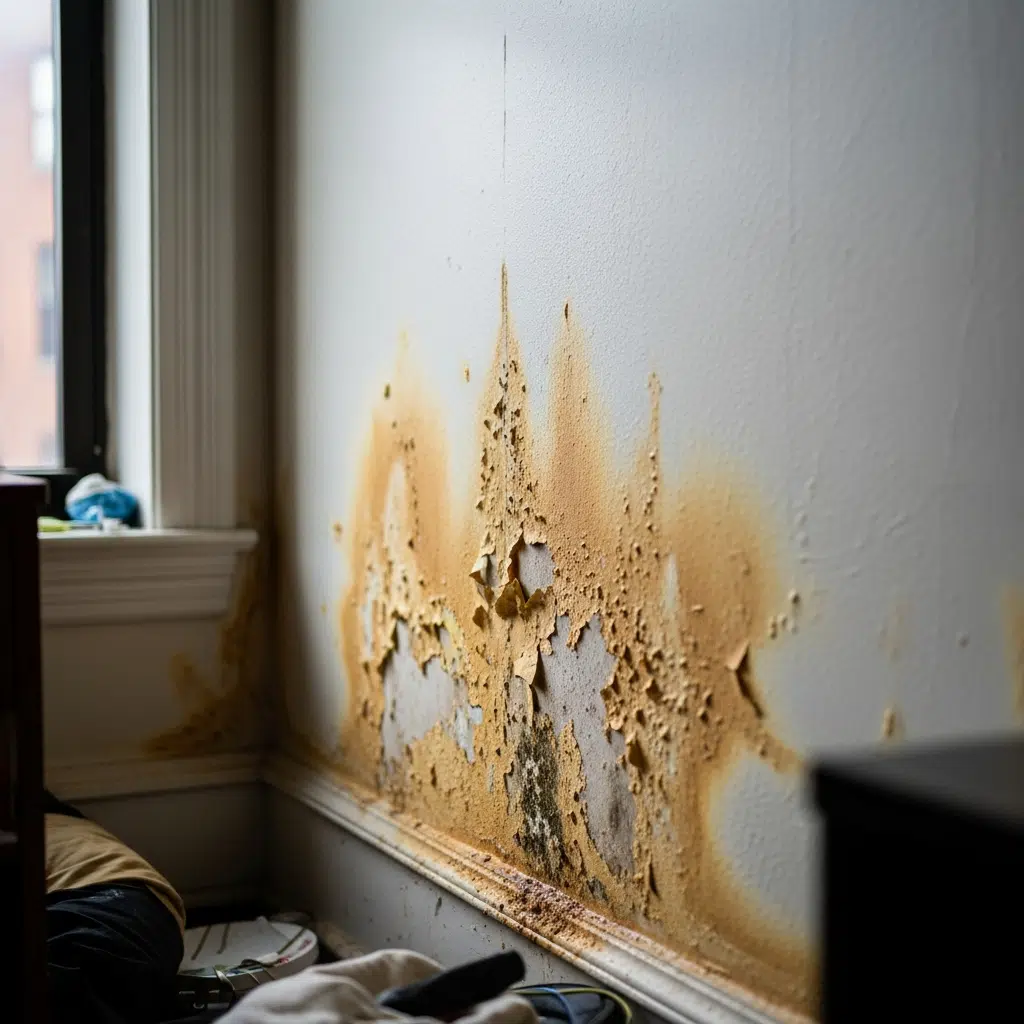
For homeowners and property managers in New York City, Long Island, and Westchester, few sights are as alarming as the sudden appearance of a yellow-brown stain spreading across a ceiling or paint bubbling on a wall. These visual cues are rarely isolated cosmetic issues; they are almost invariably the external symptoms of a much deeper, more serious problem. By the time ceiling water damage or peeling paint becomes visible, moisture has likely already penetrated building materials, creating an environment ripe for structural degradation and microbial growth.
At DASO Green Technologies, we specialize in identifying and remediating these complex issues. We understand that what you see on the surface is often just the tip of the iceberg. Addressing water damage behind walls requires more than a coat of paint; it requires a comprehensive, science-based approach to restoration and environmental safety.
The Hidden Dangers of Bubbling Paint and Water Stains
Water follows the path of least resistance. When a pipe bursts, a roof leaks, or an appliance fails, water migrates through insulation, framing, and drywall. The “bubbling” effect seen on painted walls—often referred to as blistering—occurs when water accumulates behind the paint layer, breaking the bond between the paint and the drywall or plaster. This indicates that the substrate itself is saturated.
Ignoring these signs poses significant risks:
- Structural Integrity: Prolonged exposure to moisture weakens wooden framing, rots flooring, and compromises the structural load-bearing capacity of the property.
- Indoor Air Quality and Health: Wet environments allow for the rapid proliferation of mold. Mold behind walls can begin to grow within 24 to 48 hours of water exposure, releasing spores that degrade indoor air quality and pose health risks to occupants.
- Electrical Hazards: Water moving through walls often comes into contact with electrical wiring, creating immediate fire hazards and shock risks.
Because these dangers are often concealed, wall water damage repair is not a candidate for Do-It-Yourself (DIY) attempts. Homeowners attempting to open walls without proper containment can inadvertently release mold spores or disturb lead and asbestos in older New York properties, spreading contamination throughout the home.
The Necessity of Professional Water Damage Restoration
Effective water damage restoration is a precise, technical process. Simply placing a fan in a room is insufficient to dry moisture trapped inside wall cavities or beneath flooring. Professional intervention is critical to ensure the property is returned to a safe, pre-loss condition.
DASO Green Technologies utilizes advanced diagnostic equipment, including thermal imaging cameras and hygrometers, to map the moisture footprint that is invisible to the naked eye. Our certified technicians act quickly to mitigate damage and prevent secondary issues like mold growth.
The DASO Green Technologies Restoration Process
We follow a rigorous, industry-standard protocol to ensure complete restoration:
- Assessment and Inspection: We arrive promptly to identify the source of the water and the extent of the migration. We detect drywall water damage and saturation levels in all affected materials.
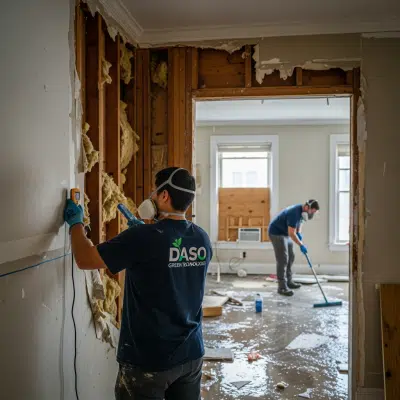
- Containment: To protect the rest of the property, we establish critical containment barriers. This prevents the spread of moisture, dust, and potential microbial contaminants to unaffected areas.
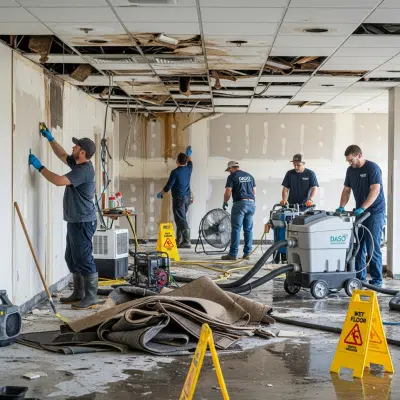
- Remediation: We carefully remove non-salvageable materials. This may involve the controlled demolition of saturated drywall, insulation, or flooring.
- Structural Drying Services: Using industrial-grade air movers and dehumidifiers, we execute a calculated drying plan. We monitor the drying progress daily to ensure all structural elements reach their dry standard.
- Cleaning and Sanitization: All salvageable surfaces are cleaned and treated with antimicrobial agents to ensure hygiene and safety.
- Restoration and Verification: Once drying is confirmed, the restoration phase begins. A final verification ensures that moisture levels are normal and the environment is safe for re-occupancy.
Recommended Industry Resource
Maintaining proper humidity levels is essential for preventing moisture accumulation in basements, warehouses, and large commercial spaces, particularly in humid climates. While professional remediation is required for active leaks and flooding, high-capacity dehumidification can help manage environmental moisture in large facilities.
For property owners managing large basements or commercial spaces, the ALORAIR Commercial Dehumidifier offers a robust solution for controlling ambient humidity. This unit is designed to extract significant moisture from the air, assisting in the maintenance of dry conditions which is crucial for long-term property preservation. Note: This product is a maintenance tool and is not a substitute for professional structural drying services in the event of active water damage.
When to Call a Professional
Time is the enemy of restoration. The longer water sits, the more damage it causes. You should contact DASO Green Technologies immediately if you observe:
- Sudden water stains on ceilings or walls after a storm or plumbing issue.
- Paint that is bubbling, peeling, or cracking with no obvious external cause.
- Musty odors, which are a strong indicator of mold behind walls.
- Warping or cupping of hardwood floors.
Our team serves New York City, Long Island, and Westchester with discretion, professionalism, and rapid response capabilities. We navigate the complexities of restoration so you do not have to, ensuring compliance with all safety regulations.
Do not wait for a small stain to become a structural emergency. Protect your property and your health by relying on certified experts.
Contact DASO Green Technologies immediately for an assessment.
Phone: 929-472-3899