Mold vs Mildew: Understanding the Critical Differences for Property Safety
For homeowners and property managers in New York City, Long Island, and Westchester, managing indoor humidity and moisture is a constant challenge. When fungal growth appears on walls, ceilings, or in basements, a common question arises: is it merely cosmetic mildew, or is it a hazardous mold infestation? Understanding the distinction between mold vs mildew is not just a matter of terminology; it is a critical factor in protecting indoor air quality, health, and structural integrity.
While both are types of fungi that thrive in moist environments, their impact on a property varies significantly. Misidentifying a severe mold colony as simple mildew can lead to delayed treatment, allowing the contamination to spread behind walls and under flooring. DASO Green Technologies provides professional assessment and remediation services to accurately identify and eliminate these threats, ensuring your property remains safe and compliant.
Identifying the Fungi: Visual and Structural Differences
To the untrained eye, fungal growth often looks similar. However, there are distinct characteristics that differentiate the two.
What is Mildew?
Mildew is typically a surface-level fungus. It often appears gray, white, or light brown and has a powdery or flat texture. It is commonly found on moist surfaces that do not have high organic porosity, such as bathroom tiles, shower curtains, and window sills. In the context of a mildew vs mold bathroom scenario, mildew is usually the substance that can be scrubbed off tile grout without leaving deep structural damage.
What is Mold?
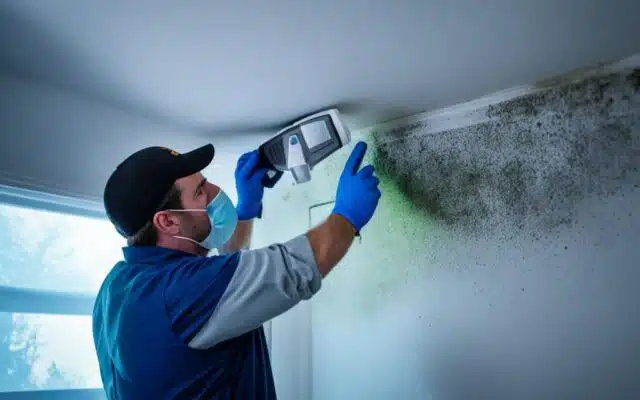
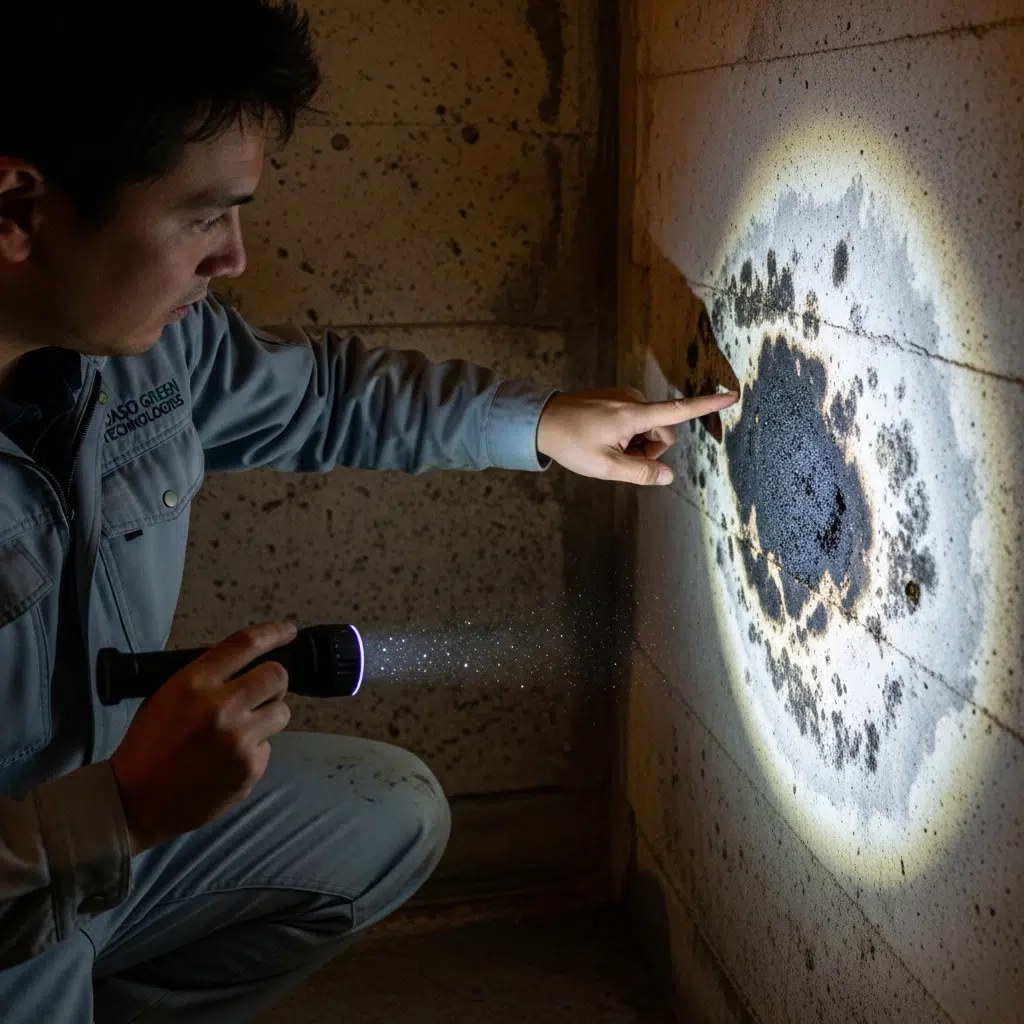
Mold is far more insidious. It manifests in various colors, including black, green, red, or blue, and often has a fuzzy or slimy texture. Unlike mildew, mold penetrates porous materials like drywall, wood, insulation, and carpeting. By the time mold becomes visible on a wall, it has likely already established a root system deep within the substrate. This deep penetration is one of the primary mold growth causes that leads to significant property damage, necessitating professional remediation rather than surface cleaning.
The Health and Safety Risks
The presence of fungal growth indicates excess moisture, but the health risks associated with mold are severe. While mildew may cause minor irritation such as coughing or watery eyes, mold spores are potent allergens and, in some cases, toxic.
Prolonged exposure to mold can degrade indoor air quality, posing serious risks to individuals with asthma, allergies, or compromised immune systems. Furthermore, mold feeds on organic building materials. Over time, an untreated infestation can compromise the structural integrity of a building, rotting wood framing and destroying drywall. This is why a professional mold inspection is essential the moment growth is suspected; determining the species and extent of the contamination is the first step toward safety.
Recommended Industry Resource
Maintaing healthy indoor air quality is an ongoing process that extends beyond remediation. For homeowners looking to proactively monitor and improve their air quality after professional services or as a preventative measure, high-quality air filtration is valuable. The KNKA Large Room Air Purifier is an excellent tool for maintaining cleaner air in residential spaces. It is designed to capture airborne particles, including dust and pollen, helping to reduce the overall load of allergens in the environment. Please note: An air purifier is a maintenance tool and cannot replace professional remediation for active mold infestations.
Why Professional Intervention is Critical
Many property owners attempt to resolve fungal issues using over-the-counter bleach solutions or DIY methods. This approach is often ineffective and dangerous. Bleach may bleach the color of the mold, making it invisible, but it rarely kills the root system embedded in porous materials. Furthermore, disturbing a mold colony without proper containment releases millions of spores into the air, cross-contaminating other areas of the home or office.
DASO Green Technologies utilizes industry-standard protocols to handle bio-contaminants safely. Our technicians are trained to distinguish between surface mildew and structural mold, ensuring the chosen remediation strategy is effective.
The DASO Green Technologies Remediation Process
When you contact DASO Green Technologies, we deploy a rigorous, multi-step process designed to restore your property to pre-loss condition.
- Assessment: We conduct a comprehensive inspection to identify the source of moisture and the extent of the fungal growth. This may involve moisture mapping and thermal imaging.
- Containment: To prevent the spread of spores, we establish physical barriers and utilize negative air pressure systems to isolate the affected area.
- Remediation: We remove contaminated materials (such as drywall or carpeting) that cannot be salvaged. Specialized antimicrobial treatments are applied to eliminate the infestation at the source.
- Cleaning: All surfaces and contents within the containment area are cleaned using HEPA-vacuuming and damp wiping techniques to remove settled spores.
- Restoration: We repair and replace removed materials, restoring the structural and aesthetic integrity of your property.
- Post-Service Verification: We ensure the environment is safe and clean before maximizing the containment removal.
When to Call a Professional
If you detect a musty odor, see visible growth larger than 10 square feet, or have recently experienced water damage from a storm or pipe burst, immediate action is required. Residents and business owners in NYC, Long Island, and Westchester rely on DASO Green Technologies for rapid, discreet, and compliant environmental services.
Do not risk your health or the value of your property by guessing. Contact our team today for a professional consultation.
Contact DASO Green Technologies: 929-472-3899