Identifying the Invisible Threat: Hidden Mold in Walls
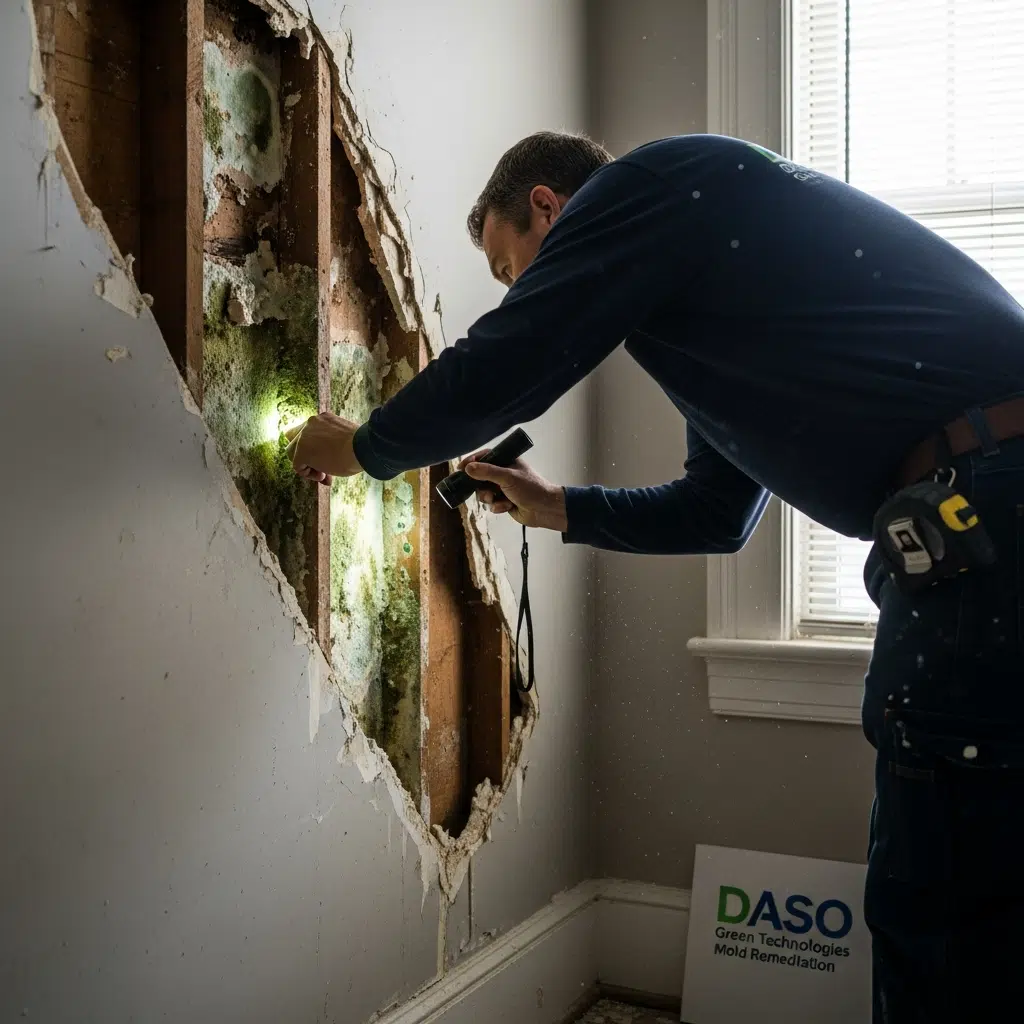
In the dense urban environments of New York City, Long Island, and Westchester, property owners often associate mold with visible black spots in bathrooms or basements. However, the most dangerous infestations are often those you cannot see. Hidden mold in walls and ceilings poses a severe threat to structural integrity and indoor air quality. Because these colonies grow undetected within wall cavities, they can spread extensively before a homeowner realizes a problem exists.
DASO Green Technologies serves as the region’s premier environmental authority, providing rigorous mold inspection services and remediation. We understand that by the time mold becomes visible on the surface of drywall, the contamination behind it is likely severe. Recognizing the subtle warning signs early is crucial for minimizing damage and health risks.
1. The Persistent Musty Odor
The most common indicator of hidden microbial growth is a distinct, earthy smell. If you detect a pungent scent that resembles damp socks or rotting wood, but cannot identify the source, do not ignore it. Understanding musty odor causes is the first step in protecting your property. Volatile Organic Compounds (VOCs) released by actively growing mold penetrate drywall and flooring. Masking these odors with air fresheners does not solve the problem; it merely disguises a respiratory hazard.
2. Unexplained Allergic Reactions
Indoor air quality is directly linked to occupant health. If family members or employees experience chronic coughing, sneezing, watery eyes, or headaches that seem to improve only when they leave the building, hidden mold may be the culprit. These symptoms are often dismissed as seasonal allergies, yet they signal that airborne spores are circulating through your HVAC system or seeping through wall outlets.
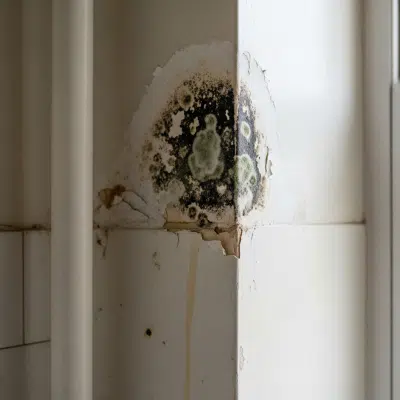
3. Surface Anomalies: Bubbling Paint and Warping
Moisture is the catalyst for all mold growth. When moisture accumulates inside a wall cavity—whether from a slow pipe leak, roof failure, or high humidity—it eventually affects the exterior surface. Look for:
- Paint that bubbles, cracks, or peels without an obvious cause.
- Wallpaper that begins to separate at the seams or curl.
- Slight bowing or warping of drywall or baseboards.
- Discoloration or yellow stains that reappear after cleaning.
These are not merely cosmetic issues; they are evidence of dampness behind the substrate supporting microbial life.
Recommended Industry Resource
Detecting the moisture that feeds mold often requires advanced technology. Professionals utilize industrial-grade thermal hygrometers and infrared cameras to identify temperature differentials caused by evaporation. For property managers and homeowners interested in understanding the principles behind this detection technology, the Klein Tools Thermal Imager serves as an excellent educational tool. This device illustrates how temperature variations usually invisible to the naked eye can indicate areas of moisture intrusion.
Please Note: While such tools provide valuable insight, they do not replace a certified environmental assessment. Thermal imaging mold detection requires professional interpretation to distinguish between thermal bridges, insulation gaps, and active moisture sources.
Why Professional Intervention is Critical
Discovering potential signs of mold often triggers a dangerous instinct: the desire to cut open the wall to “check.” Do not attempt to open walls or ceilings yourself. Disturbing a containment area without negative air pressure releases millions of concentrated spores into the habitable space, contaminating furniture, HVAC systems, and lungs.
DASO Green Technologies employs a strict, science-based protocol to handle these biohazards safely.
The DASO Green Technologies Remediation Process
Our certified technicians follow a comprehensive workflow designed to restore your property to a safe baseline:
- Assessment: We utilize advanced moisture mapping and sampling to determine the extent of the infestation.
- Containment: Before any demolition occurs, we establish heavy-duty physical barriers and utilize HEPA-filtered negative air machines to prevent cross-contamination.
- Remediation: Contaminated materials (drywall, insulation, flooring) are safely removed and disposed of according to environmental regulations.
- Cleaning: Structural elements remaining in the home are treated with antimicrobial solutions and HEPA vacuumed to remove surface spores.
- Restoration: We prepare the area for reconstruction, ensuring the underlying moisture source has been fully resolved.
- Post-Service Verification: We do not guess; we verify. Final testing ensures that indoor air quality has returned to safe levels.
Contact Us for Immediate Assessment
If you suspect hidden mold in your home or business, time is of the essence. Delaying remediation can lead to exponential growth and significant structural repair costs. Trust the experts at DASO Green Technologies to handle the situation with discretion, precision, and urgent care.
We proudly serve New York City, Long Island, and Westchester. Protect your property and your health by calling our emergency response line today.
Call Now: 929-472-3899