Is All Mold Dangerous? What Homeowners Need to Know
For homeowners in New York City, Long Island, and Westchester, the discovery of mold often triggers immediate anxiety. A common question arises: is mold dangerous in every instance, or are certain types benign? While microscopic mold spores exist naturally in our environment, indoor fungal growth represents a failure of the building envelope and a significant threat to indoor air quality.
At DASO Green Technologies, we emphasize that while not every mold species produces mycotoxins, any visible indoor growth indicates a moisture problem that requires professional attention. Ignoring these signs can lead to escalating property damage and potential health risks.
Debunking Common Household Mold Myths
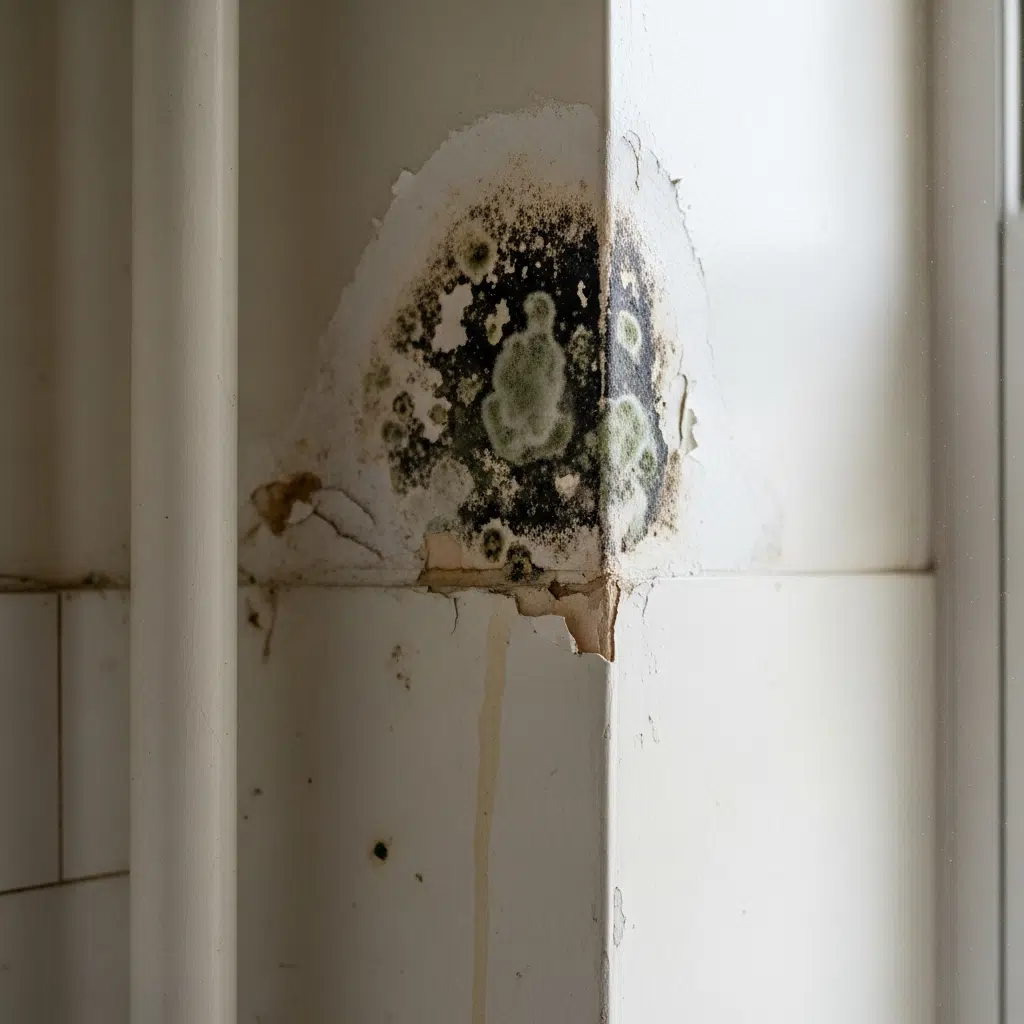
One of the most persistent misunderstandings involves black mold myths. Many property owners believe that only “black mold” (Stachybotrys chartarum) is dangerous, leading them to ignore green, white, or brown colonies. This is a critical error. Color is not a reliable indicator of toxicity or risk level.
Common household mold species, such as Aspergillus, Cladosporium, and Penicillium, can grow rapidly on damp drywall, wood, and insulation. Even without producing mycotoxins, these fungi release high concentrations of spores into the air. When confined within a home or office, this elevated spore count can compromise the respiratory health of occupants.
The Real Risks: Health and Structural Integrity
When evaluating mold health effects, it is vital to understand that reactions vary by individual. However, the Environmental Protection Agency (EPA) and health organizations agree that exposure to damp, moldy environments can cause a variety of health effects. These range from allergic reactions—sneezing, runny nose, red eyes, and skin rash—to more severe asthma attacks in sensitive individuals.
Beyond health concerns, mold is a structural parasite. It feeds on organic materials like cellulose found in paper, wood, and cardboard. Over time, unchecked growth compromises the structural integrity of walls, floor joists, and ceilings. In the dense urban environments of NYC and the residential suburbs of Westchester and Long Island, protecting your property value requires immediate remediation of moisture intrusion.
Recommended Industry Resource for Early Detection
Early detection is vital for maintaining a healthy home environment. If you suspect an issue but cannot see visible growth, or if you wish to monitor your air quality before contacting a remediation team, specific diagnostic tools can provide preliminary data.
We recommend the Professional Grade Home Mold Test Kit. This resource allows homeowners to collect samples for lab analysis, offering insight into the specific types of spores present in the air. Note: While testing provides information, it does not replace professional remediation. If elevated levels are found, professional intervention is required to remove the source safely.
Why DIY Remediation is Dangerous
When homeowners discover mold, the instinct is often to scrub it away with bleach. DASO Green Technologies strongly advises against this. Consumer-grade cleaning agents often bleach the color of the mold without killing the root structure, allowing it to return stronger. More importantly, scrubbing dry mold disturbs the colony, releasing millions of microscopic spores into the air.
Without proper containment, a small, localized issue in a bathroom can quickly spread spores to the HVAC system, contaminating the entire home. Professional remediation is not just about cleaning; it is about engineering controls that protect the rest of the property during the removal process.
The DASO Green Technologies Protocol
As a leading environmental services company, our approach is rigorous, scientific, and compliant with industry standards. We utilize advanced equipment to ensure your property is restored to a safe condition.
- Assessment: We identify the extent of the growth and, crucially, the source of the moisture.
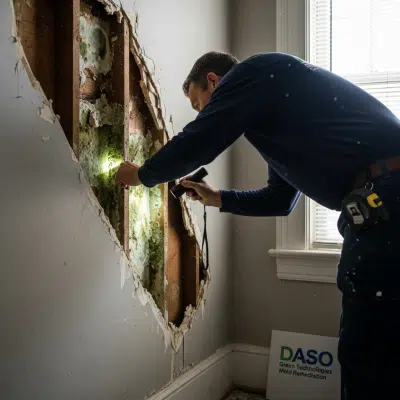
- Containment: Technicians establish physical barriers and use negative air pressure machines to prevent cross-contamination to clean areas of the home.
- Remediation: We physically remove contaminated porous materials and treat semi-porous surfaces using antimicrobial solutions and HEPA vacuuming.
- Restoration: We repair and replace removed materials, returning your home to its pre-loss condition.
- Post-Service Verification: We ensure that the environment meets safety standards before declaring the job complete.
When to Call a Professional
If you detect a musty odor, see visible growth larger than 10 square feet, or have recently experienced water damage, immediate action is required. Mold can begin growing within 24 to 48 hours of a water event.
DASO Green Technologies serves New York City, Long Island, and Westchester with rapid response capabilities. Do not gamble with the safety of your family or the integrity of your real estate.
Contact us immediately for a professional consultation.
Phone: 929-472-3899