Flooded Basement Cleanup: Why Waiting 24 Hours Makes It Worse
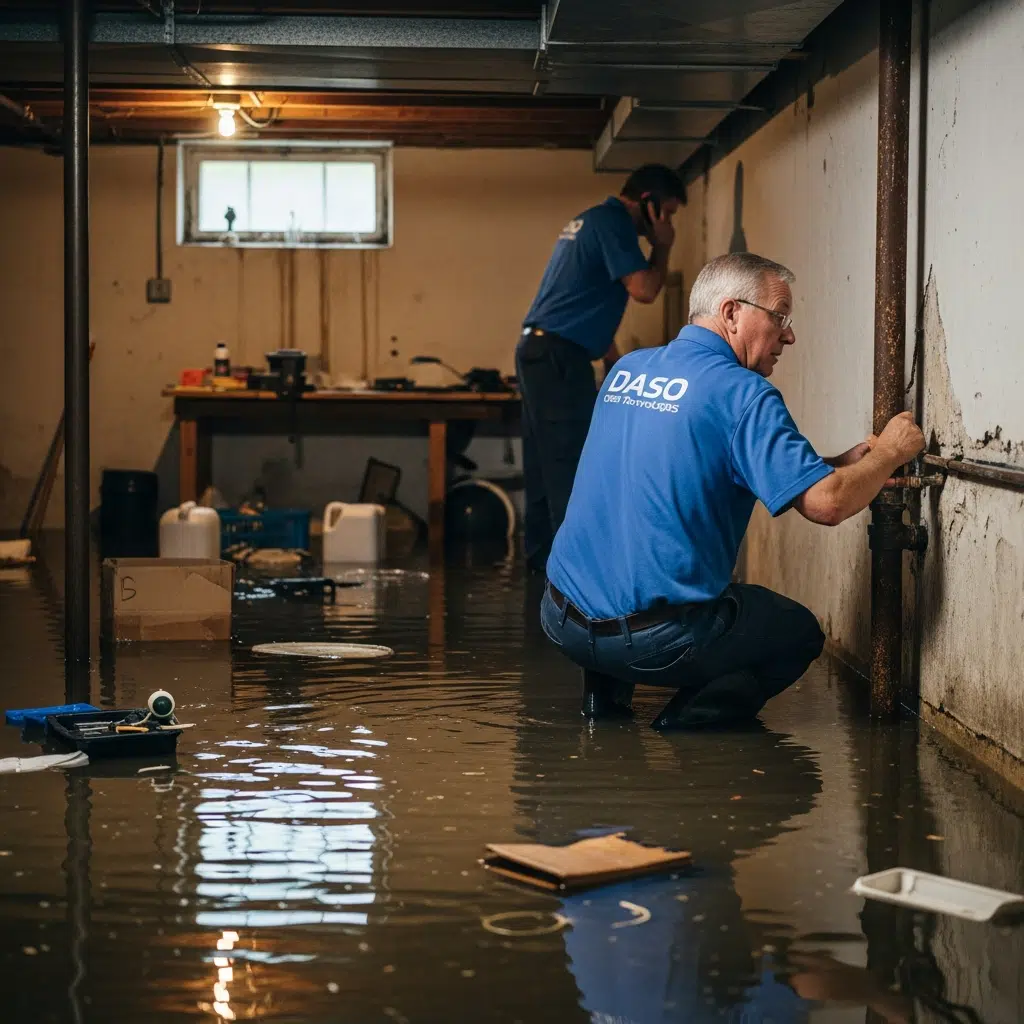
For homeowners and property managers in New York City, Long Island, and Westchester, a flooded basement is more than an inconvenience; it is a structural and environmental emergency. Water intrusion triggers a rapid sequence of destruction that compromises building materials and indoor air quality within hours. Understanding the critical timeline of water damage is essential for protecting your property.
At DASO Green Technologies, we specialize in rapid response and mitigation. Our experience confirms that the difference between a manageable restoration and a catastrophic loss often comes down to the first 24 hours. Waiting to address the issue allows water to migrate deep into structural cavities, drastically increasing the complexity of flooded basement cleanup.
The Critical Timeline of Water Damage
Water is a pervasive force. From the moment it enters a basement—whether due to a burst pipe, storm surge, or foundation failure—it begins to degrade the environment. The clock starts ticking immediately:
- Minutes to Hours: Water spreads quickly across floors and absorbs into porous materials like drywall, insulation, and untreated wood. Furniture finishes may bleed, causing permanent staining on carpets.
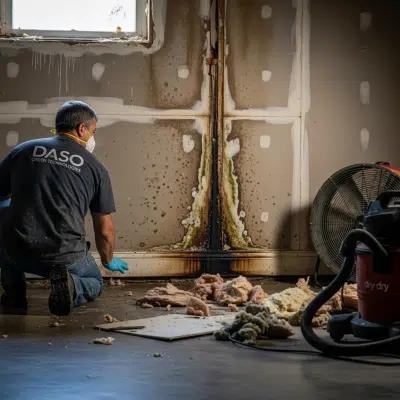
- 24 Hours: This is the tipping point. Drywall begins to swell and break down. Metal surfaces start to tarnish. Most importantly, dormant mold spores naturally present in the air begin to germinate once exposed to sustained moisture.
- 48 Hours and Beyond: Microbial growth becomes visible. The structural integrity of wood framing weakens, and biohazards may contaminate the air quality throughout the entire building.
The Risks of “Wait and See”
Many property owners make the mistake of assuming that if standing water subsides, the danger has passed. This is a dangerous misconception. Sub-surface moisture remains trapped behind walls and under flooring, creating a breeding ground for pathogens. Mold after flooding is a significant health risk, particularly for those with respiratory conditions. Without professional intervention, these hidden pockets of moisture ensure that mold colonies continue to thrive long after the water appears gone.
Furthermore, depending on the source of the water, the flood may be categorized as Category 2 (Grey Water) or Category 3 (Black Water). Attempting to handle these contaminants without proper personal protective equipment (PPE) poses severe health risks.
The DASO Green Technologies Protocol
Professional remediation is not merely about pumping out water; it is a scientific process of environmental control and material preservation. DASO Green Technologies employs a rigorous, multi-step protocol to ensure total restoration.
1. Comprehensive Assessment
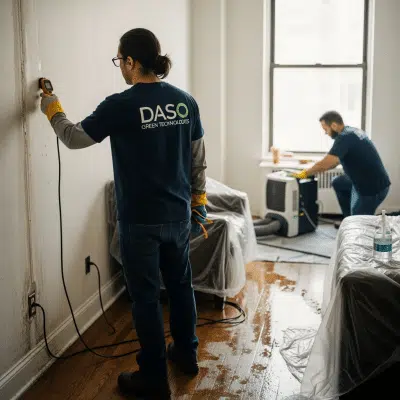
Our trained technicians utilize advanced moisture detection equipment, including thermal imaging cameras and hygrometers, to map the extent of water migration. We identify moisture hidden behind walls and under subfloors that the naked eye cannot see.
2. Containment
To protect the rest of the property from cross-contamination and airborne spores, we establish physical containment barriers. This isolates the affected area, preventing the spread of humidity and contaminants to upper levels.
3. Remediation and Extraction
We utilize industrial-grade submersible pumps and truck-mounted vacuum units for emergency flood cleanup. This phase removes the bulk of standing water rapidly, halting immediate damage.
4. Structural Drying
Removing standing water is only half the battle. We deploy high-velocity air movers and industrial dehumidifiers to execute structural drying. This process pulls bound moisture out of framing, concrete, and drywall, returning the materials to their dry standard.
5. Cleaning and Decontamination
All restorable surfaces are cleaned and sanitized using EPA-registered antimicrobial treatments. This step is vital for neutralizing bacteria and preventing future mold growth.
6. Post-Service Verification
We do not leave until the job is done. A final inspection and moisture reading verify that the property has reached the appropriate drying goals and is safe for re-occupancy.
Recommended Industry Resource
While professional remediation is mandatory for flooding events, maintaining optimal humidity levels in a basement year-round is a proactive measure every homeowner should take. High humidity alone can trigger microbial growth, even without a flood.
For ongoing humidity control in large basement spaces, we recognize the utility of robust units like the Midea Cube Dehumidifier. This unit is designed to handle significant square footage and includes a pump, making it an effective tool for maintaining a dry baseline environment after professional restoration is complete. Please note, this device is for maintenance and is not a substitute for professional water extraction services.
Contact Us for Immediate Assistance
When water enters your basement, time is your enemy. Do not rely on DIY methods that leave hidden moisture behind. Trust the certified experts at DASO Green Technologies to restore your property to its pre-loss condition efficiently and safely.
We serve New York City, Long Island, and Westchester with 24/7 emergency capabilities. If you suspect basement water damage restoration is required, contact us immediately.
Call 929-472-3899 now for emergency assessment.